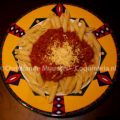
With leftover meat from making game stock When you have made a concentrated game stock, you can sometimes save enough meat from the bones to make a tasty sauce. I had six kilo bones of hare and deer. When I had strained the stock I had almost one kilo of cooked meat. Being Dutch, I wouldn’t…
ORIGIN
Traditional Dutch Banketletter

“Keep it simple: start with an I” The banketletter is one of the few traditional Dutch Christmas bakes, as most Dutch December bakes are actually done for the national children’s feast Sinterklaas on December 5th. Most people just buy it in the stores, and I must admit that it takes some work to make a…
Deep-fried braids(Dafâir)

Straight to the recipe An Arab recipe from the thirteenth century Arab pastry is delicious. Sweet and rich, but really delicious. This was already so in medieval times on, when sweet pastry was served after a meal. You can imagine that after a copious meal with a plethora of mouth-watering dishes the pastry had to be very…
Soup with Sauerkraut? Delicious!
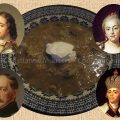
Straight to the recipe A Russian recipe from 1861 During my preparations for a presentation in October 2014 in the Hermitage Museum in Amsterdam for a talk in the accompanying program for the exhibition Dining with the Czars, I experimented with several Russian nineteen-century recipes. I have adapted one of those recipes, a soup, for this page. The…
Stockfish with peas, apple and raisins

Straight to the recipe An ode to dried food A very medieval tasting recipe. It’s an ode to dried food, except the onion all ingredients are dried. This makes it an excellent dish for end of winter. The recipe was meant for fishdays or for Lent. If you prepared it for a fishday you could use butter, but in Lent when…
Traditional Game Sauce

Made with left-over meat from game stock When preparing a concentrated game stock, there is sometimes enough meat from the bones to make a tasty sauce. I had six kilo (twelve pounds) bones of hare and deer. When I had strained the stock I had almost one kilo of cooked meat. Being Dutch, I wouldn’t think…
Black salsify with parsley sauce

Straight to the recipe A ‘forgotten’ vegetable There are two vegetables that look like asparagus once they’re peeled: salsify and scorzonera or black salsify. Both are winter vegetables, and both are the root of a plant, while asparagus is actually the stalk with the bud. According to Allan Davidson, salsify (Tragopogon porrifolius) is better known…
Red mustard the Roman way

Straight to the recipe This is not the first recipe for mustard on Coquinaria. The first mustard-recipe, from the fourteenth-century cookbook Le Ménagier de Paris, was published fifteen years ago. Mustard in the Middle Ages and Early Modern Times is comparable to tomato ketchup or soy sauce in some restaurants: there is a bottle on…
Sponge cake for trifle
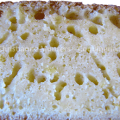
Straight to the recipe Mrs Beeton’s recipe Trifle is built on a layer of sponge cake. Since I have used Mrs Beeton‘s recipe for trifle from the Book of Household Management (1861, it was logical to use her recipe for sponge cake too. She even states explicitly that ‘leftover’ sponge cake can be used for trifle and pudding. The cake…
Panunto

Crostini with cheese The Italian cuisine is one of my favourites. So, here is another recipe from Italy’s rich culinary past! I have made these small toasts many times, and each time my guests were pleasantly surprised by the simplicity and delicious taste of these crostini. The flavour is unexpected for modern palates: cheese, sprinkled with sugar and cinnamon,…
Lemonade

Een French recipe from the seventeenth century Straight to the recipe A very simple recipe, because I am in the middle of moving house (summer 2007), and have been very busy. Where does the word lemonade come from? Lemonade comes from ‘lemon’ or the French ‘limon’. Another French word for lemon is citron, which is…
Roman apricots
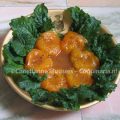
A summer starter Straight to the recipe The classical Roman kitchen consisted of much more than spectacular and pretentious dishes with exotic ingredients. On the contrary, a true Roman appreciated simple food with vegetables and fruit, like the recipe of this page, Roman apricots. This dish was not a dessert, but was served during the first course of the meal, the gustatio….
Vol-au-vent with ragoût

An old-fashioned first course This used to be a traditional first course in many Dutch Christmas meals. The most common version: ready-bought vol-au-vents, heated in the oven, a can of ragout, heated on the stove. The ingredients of canned ragout: water (what it contains most of is mentioned first), and less than 20% meat. Not just…
Tuna with mustard crust
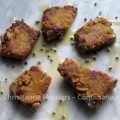
Straight to the recipe A spicy Walloon dish from the sixteenth century Last year I published a recipe for mushroom pie from Lancelot de Casteau, the sixteenth-century cook for several bishops of the Prince-Bishopric Liège, and I promised to revisit this cookbook soon. Not a lot is known about Lancelot de Casteau. He was born in Mons, lived…
Mashed potatoes and endives
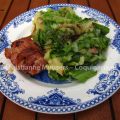
A very Dutch summer fare This dish, boiled potatoes and uncooked endives mashed together, was the favourite dish of my mother. We still prepare it on her birthday and her date of death (twenty years ago). So, for my family and me this is an emotional dish. My mother preferred meatballs with it, but I…