
Straight to the recipe A medieval first course from Germany I am lucky with my neighbours. At the moment, I live next door to the core of the musical group EnsembLeChatNoir, who give beautiful – and sometimes multimedia – concerts. At my previous house there was also an artistic neighbour, a cermist. She is from Germany, and…
Middle Ages
Arabian pasties

Straight to the recipe Just like the Arabian meatballs, these pasties were presented at the opening of the exhibition of Sidrac in 2006. The pasties are stuffed with eggplant from the Anonymous Andalusian Cookery book, and spinach from the Kitāb al-Ţabīkh-al-Baghdadī. Both cookbooks date from the thisrteenth century. More on the Andalusian cookbook can be read at the…
A medieval evergreen

Very, very healthy! In Asterix in Britain, the heroes Asterix and Obelix’ first meal on British soil is eaten in a pub called ‘The Jolly Boar’. Obelix is deeply disappointed, his favourite boar has not been roasted, but boiled. To make matters even worse, it is served in a green mint sauce. Boring. Had Obelix lived fourteen centuries later,…
Medieval Beef Stock

This recipe is not based on a medieval source, there are no separate recipes for medieval stock. Stock was so common, there was no need to write down recipes for that, just as with recipes for baking bread. Often, the stock used in recipes was simply the liquid in which meat was cooked. So here…
Mock eggs for Lent

Just for fun Straight to the recipe This an extra recipe with the Medieval coloured easter Eggs. During Lent, between carnival and Easter, no eggs were eaten. But sometimes eggs did appear on the table, as a joke. These were mock eggs, made with pike roe (also eggs, but from fish, so these were permitted) or…
Hippocras, a medieval digestive

“To your health!” Sangria, punch and bishop wine all are descendants of spiced wines that have been drunk since Antiquity. They were especially populair in the Middle Ages, when they were served at the end of a meal as digestive. These wines, with added spices and sweetened with sugar (which was also considered a spice),…
Fish with leeks for Lent

Straight to the recipe Herring, often in preserved form, is very important food for medieval people. During the fifteenth century, when the recipe on this page was written, one could buy very salty pickle herring, dried herring en smoked herring. The English have, just like the Dutch, several kinds of smoked herring, like kipper, bloater…
Arab meatballs with aubergines
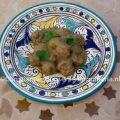
Straight to the recipe During the caliphate of the Abbasides (749-1258 AD) the Arab cuisine was at its prime. In its heydays the Caliphate spread from modern Tunesia to India. The culinary arts were highly regarded. Poets composed works on their favorite dishes, cookbooks were dedicated to the caliphs. There were also scientific works on the…
Aubergines in aubergine sauce
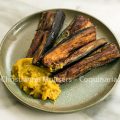
This recipe for aubergines (eggplants) with aubergine sauce was chosen because of the possible connection with an Arab recipe with aubergines. It is from an Italian cookbook from the end of the fifteenth century that has been published by Terence Scully as The Neapolitan recipe collection. ‘Cuoco Napoletano’ (see bibliography). The Southern part of Italy has been…
Verjuice

Wine nor vinegar Literally verjuice means ‘green juice’ (from French ‘jus vert’). It is the juice from unripe grapes, unripe apples, sorrel, goose berries, whatever, as long as it is sour. It is a common ingredient in medieval recipes, and even in later recipes up to the seventeenth century. Then it was no longer in…
Fake Fish
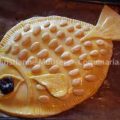
Straight to the recipe Medieval apple pie for Lent Lent – The fishy season In the Middle Ages the catholic church prescribed what was on the daily menu. Each week counted at least one day, and more often three or even four days (depending on where and when in medieval Europe) during which no meat…