
Straight to the recipe Herring, often in preserved form, is very important food for medieval people. During the fifteenth century, when the recipe on this page was written, one could buy very salty pickle herring, dried herring en smoked herring. The English have, just like the Dutch, several kinds of smoked herring, like kipper, bloater…
MENU
Mussels in antiquity
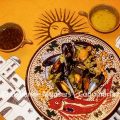
Straight to the recipe As the Romans liked to eat them The months around Thanksgiving and Christmas are filled with good wining and dining. Give yourself a break from stuffed turkeys and roasted gammon, and have some humble shellfish. The mussel has been eaten ever since the stone age. The historical recipe on this page…
Roman tuna
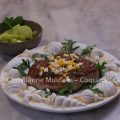
Straight to the recipe Great with stewed cucumber Every year around the first day of May there is a Romeinenweek or ‘Week of the Romans’ in the Netherlands, when Roman heritage is put in the spotlight with festivals, events and activities. This year I was there on April 29 at a recently discovered Roman army marching…
Sixteenth-century pasta dough

Straight to the recipe Two recipes from the Opera of Bartolomeo Scappi Let’s all say it once more, loud and clear: “Marco Polo did NOT bring pasta to Italy from China!” Dried pasta was already eaten in Europe before the good man returned from his travels in 1295. According to some, pasta was already known to the…
Imperial cucumber
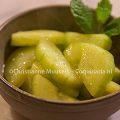
Straight to the recipe Great with Roman tuna Pliny the Elder (23 – 79 AD) describes in his encyclopedia Naturalis historia everything that live and exists on Earth. Originally there were 102 volumes, but unfortunately only 37 have survived. These 37 volumes include the ones on animals and plants, so we can still read what Pliny had to…
Royal Punch from Poland

Straight to the recipe The recipe on this page is a historical version of the Feuerzangenbowle that can also be found on Coquinaria. Both are for hot, mulled wine that is sweetened by a sugar cone which is drenched in rum and set alight above the punch bowl. I was looking for a historical version of the…
Royal peas
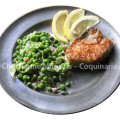
Well alright then, just the one! Straight to the recipe Garden peas were an absolute hype in the seventeenth century. They were enjoyed much the same way as we nowadays eat chocolate, like a delicious sin. Madame de Maintenon, mistress of Louis XIV wrote in 1696: “Il y a des dames qui, après avoir soupé, et bien soupé, trouvent…
Arab meatballs with aubergines
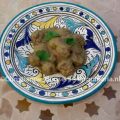
Straight to the recipe During the caliphate of the Abbasides (749-1258 AD) the Arab cuisine was at its prime. In its heydays the Caliphate spread from modern Tunesia to India. The culinary arts were highly regarded. Poets composed works on their favorite dishes, cookbooks were dedicated to the caliphs. There were also scientific works on the…
Aubergines in aubergine sauce
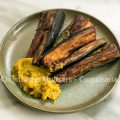
This recipe for aubergines (eggplants) with aubergine sauce was chosen because of the possible connection with an Arab recipe with aubergines. It is from an Italian cookbook from the end of the fifteenth century that has been published by Terence Scully as The Neapolitan recipe collection. ‘Cuoco Napoletano’ (see bibliography). The Southern part of Italy has been…
Verjuice

Wine nor vinegar Literally verjuice means ‘green juice’ (from French ‘jus vert’). It is the juice from unripe grapes, unripe apples, sorrel, goose berries, whatever, as long as it is sour. It is a common ingredient in medieval recipes, and even in later recipes up to the seventeenth century. Then it was no longer in…
Fake Fish

Straight to the recipe Medieval apple pie for Lent Lent – The fishy season In the Middle Ages the catholic church prescribed what was on the daily menu. Each week counted at least one day, and more often three or even four days (depending on where and when in medieval Europe) during which no meat…
Feuerzangenbowle, playing with fire

In October 2018 I gave a guest-talk for an international group of ex-pats in The Hague on spiced wines through the ages. It was a great evening, especially because these people, from all over the world, quite liked the experience. One of the people present was Thomas, a German. He asked me whether I had…
Roman broccoli
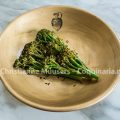
A recipe for broccoli from De re coquinaria, a Roman cookbook with recipes from the 1st to 4th centuries. If a vegetable like broccoli already existed, it was probably something that looked like Brassica rapa var. Cymosa, also known as Cima di rapa or rapini (broccoli raab): thin stalks with leaves and small flowerbuds. Where I live (the Netherlands), Cima di…
Macaroni with tomatoes

Straight to the recipe From the Oorlogs-kookboek (‘War-cookbook’) from 1918 This is a Dutch recipe from World War I, also known as the Great War. The peoples of all the combatant nations dealt with hunger, food shortage and rationing (see here). The Netherlands remained neutral … The Netherlands did not participate in the war. At the…
Japanese bouillon for noodles
Asian noodles enjoy a worldwide popularity, thanks to the easily prepared noodles that only need boiling water. Japanese noodles can be eaten hot or cold. When served hot, the noodlses must be piping hot, and it is allowed to make some noise while eating them. The bouillon in which the noodles are served has two…